
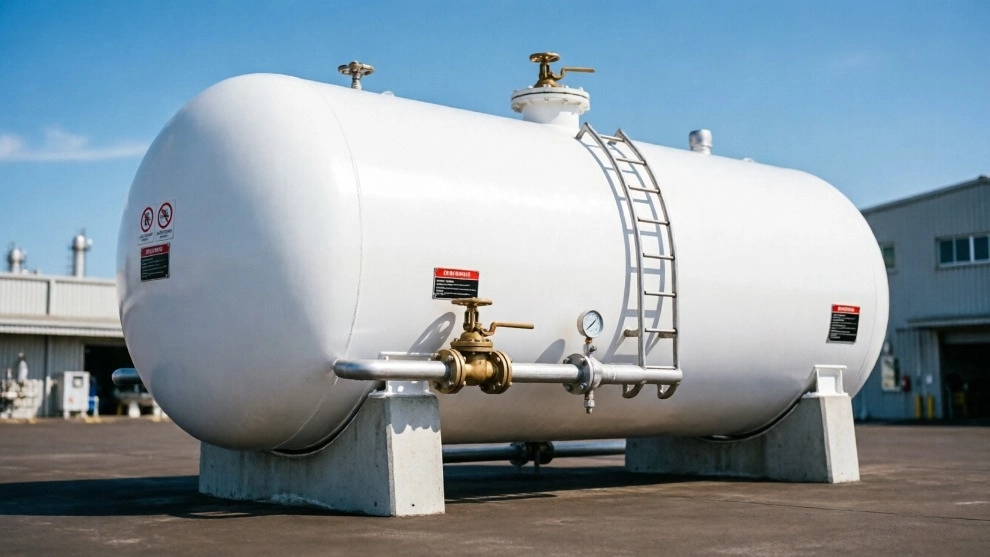
Why choosing the best liquid gas tank manufacturing company is crucial?
Distinguishing technical characteristics of tobacco gas tanks
1. Special materials and alloys
2. Specialized and controlled welding
3. heat treatment (PWHT)
4. Rigorous non-destructive tests (NDT).
- RT (radiography): 100% inspection of longitudinal and circumferential welds.
- UT (Ultrasonic): thickness measurement and detection of internal defects.
- PT/MT (penetrating liquid and magnetic particles): examination of surface defects.
- Hydrotest: hydrostatic test with a pressure of 1.5 times the design pressure to ensure strength Kelly.
Types of liquefied gas tanks that can be produced in Tabagas
- Horizontal Storage Tanks: Suitable for storing LPG, ammonia and chlorine in power plants and refineries. These tanks are usually installed on concrete saddles.
- Vertical Tanks: Ideal for confined spaces and applications such as boilers or compressed air systems.
- Cryogenic Tanks: Designed to store liquid gases at very low temperatures (such as oxygen and liquid nitrogen) with vacuum insulation. Jacketed).
- Vehicle Fuel Tanks: CNG/LPG tanks for fueling public and heavy transport fleets.
- Heat exchangers and reboilers: Equipment that are often used next to liquid gas tanks for liquid evaporation or condensation.
Ordering process and construction supervision
Economic and long-term benefits of cooperation with Tabagas
- Reduction of maintenance costs: Quality tobacco tanks do not require frequent repairs and eliminate production line downtime costs.
- Easy insurability: Insurance companies charge lower insurance premiums and provide better coverage for standard and certified tanks.
- Higher salvage value: Use The original material makes the recycling value of the tank higher even after the end of its useful life.
- Energy saving: Optimal design and correct insulation (in cryogenic or hot tanks) minimizes energy loss.