
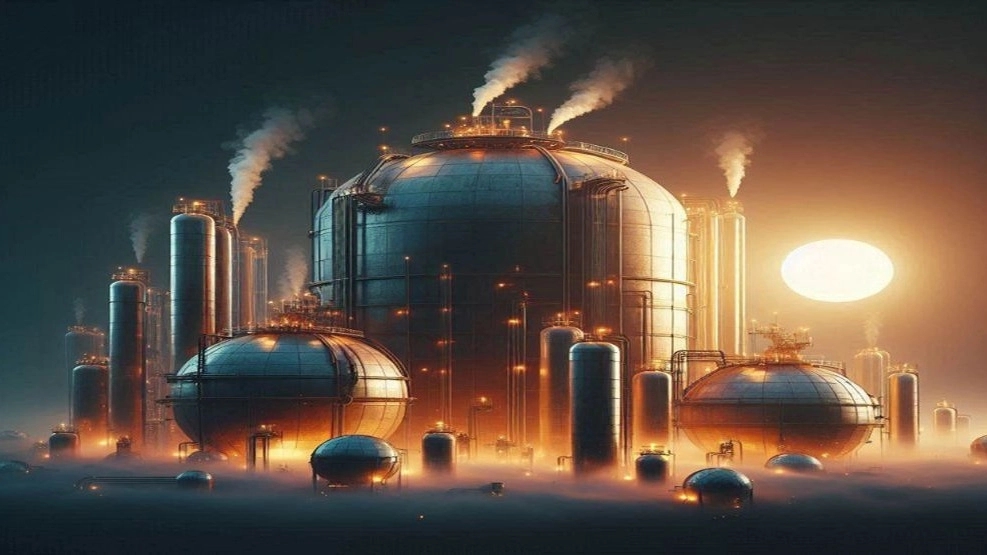
What is the Liquid Gas Storage Reservoir?
Liquid gas storage tank, an iron tank with thicknesses of 6, 8 or 10 and 12 mm, this tank is welded in three basic stages. First, the root pass using electrode welding, then the second pass using CO2 welding and finally the final pass with sub-powder welding machine. As you know, gas storage tanks, especially liquid gas, have a pressure of over 10 bar.
As a result, we must observe all the standard points during the construction because failure to observe the safety points will be dangerous.
steps to build liquid gas storage tank
Reservoir design in ASMEVIII software
Mechanical drawing design
Workshop shop map design
Receive approval of construction plans from the employer
Analysis of purchased material
Perform the cutting steps according to the plan
Making forming cap and lens
Preparation of loose sheet welding
Cylinder assembly and rolling
Assembling the lenses on the shell
Installation of flanges and nozzles
Loose chamfering and underlayment
Root pass welding of liquid gas storage tank
Construction and installation of foundations (if present in the map)
Hydrostatic and radiographic test
color work
Packaging and delivery
Material Making:
Lenses with standard form and press
A516 sheet alloy with grade 70 with thicknesses of 6, 8, 10 and 12
Blade base
Final welding under powder
Class 3000 connections
Targeting Gas Storage
Usually, the demand for liquefied gas is higher in the cold seasons of the year (due to its use in heating devices and equipment in residential and commercial buildings), which in recent years has led to a drop in the pressure of the national gas network. And in some cases, it has caused the gas consumption of factories and industrial towns to be cut off in the cold seasons, so storing the excess amount of gas that is produced in the hot seasons of the year as a solution to compensate for the pressure drop or gas cut in the cold seasons of the year , has received the attention of industries is.
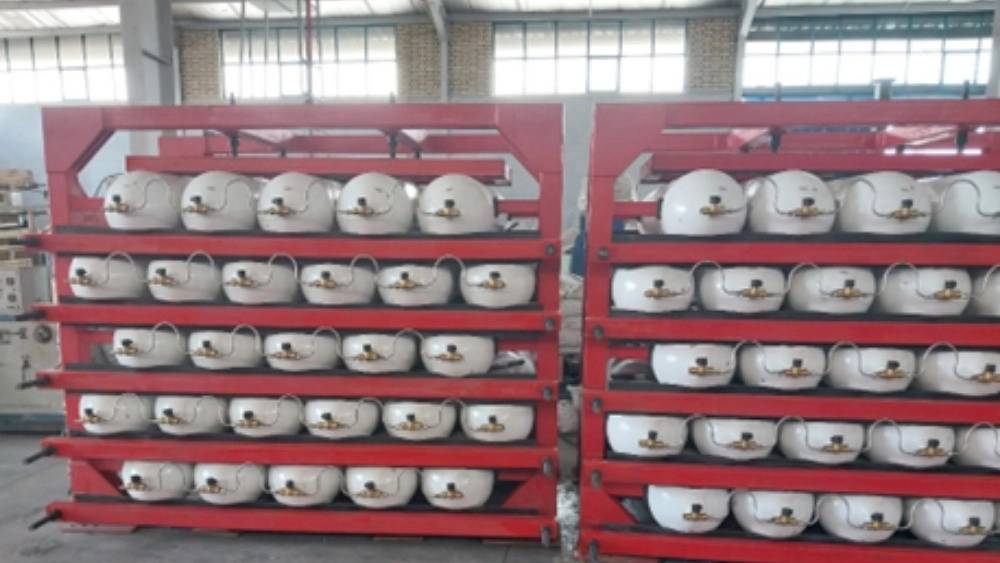
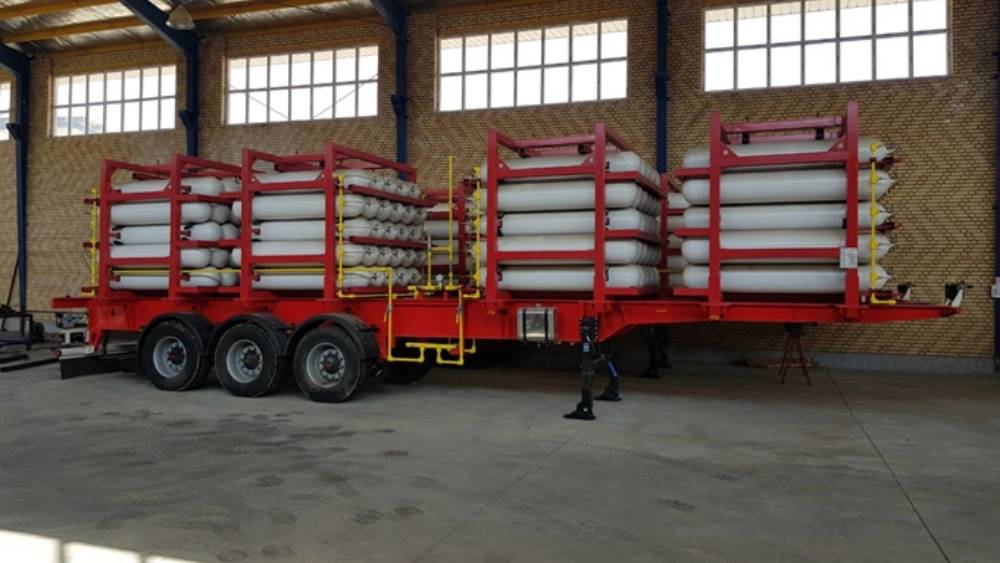
Gas Storage by CNG
In this method, natural gas is condensed in seamless steel tanks (CNG Seamless Cylinder) to a pressure of 200 bar to use the stored gas in necessary conditions. Exploitation of the gas stored in the aforementioned tanks requires the construction of a gas pressure reduction station at the place of consumption.
Among the advantages of this plan, the following can be mentioned:
No need to build a pipeline due to the ability to transport the mentioned tanks by road
No harm to the environment due to no need to build a pipeline
The possibility of supplying or sending the required gas to remote and inaccessible residential areas that do not have access to the national gas network.
Gas supply to small industries during peak gas consumption times (cold seasons of the year)
The very low cost of gas transmission using CNG method compared to the costs of constructing pipelines and pressure boosting stations
Gas Storage by Ang
In this method, gas storage is done at a very low pressure (about 10%) compared to CNG. In this technology, gas storage and reuse is performed according to the surface absorption and disposal of active carbons (surface absorbents). In the ANG method, the surface adsorbent plays a decisive role so that they must have the maximum absorption capacity. The absorbers have special surfaces, volume of holes and consequently have different storage capacity. Optimizing these factors can lead to the design of tanks with less weight and volume as well as more storage. One of the most important limitations of this plan is the high cost of providing surface absorbents during the construction and operation period.
Gas Storage by SNG method
SNG or Synthetic Natural Gas is obtained from the combination of LPG (Liquefied Petroleum Gas) and air. Due to its unique characteristics, this fuel can be a suitable substitute for natural gas and can be used as a second fuel in high consumption industries such as power plants, steel factories and iron smelters and industries that use huge furnaces. Due to the higher calorific value of liquefied gas compared to natural gas, by combining liquefied gas with air, the calorific value of liquefied gas becomes equivalent to natural gas (Wobe Index).
A SNG gas production system contains the following units and equipment:
- واحد تخلیه گاز مایع یا واحد
- واحد ذخیره سازی گاز مایع
- پمپها
- دستگاه تبديل گاز مايع به بخار
- واحد تولید هوا
- مخلوط كن(Blender)
- مخزن آرامش
Types of Tanks
- مخازن را باید روی پایه های بادوام از جنس مواد بنایی سخت یا بتون با اسکلت فلزی سوار کرد. به هرحال جنس این پایهها باید در مقابل آتش سوزی مقاوم بوده و زیر سازی آنها محکم باشد.
- پایههای مخزن نباید مانع انقباض و انبساط آزادانه مخزن گردد.
- هر مخزن را که ظرفیت آبی آن 7500 لیتر یا کمتر است میتوان روی پایههای فلزی محافظت نشده در مقابل آتش سوزی سوار کرد مشروط بر آنکه اولا این پایهها روی سطح یا زیر سازی بتونی نصب شده باشد و ثانیاً فاصله سطح زیرین بدنه مخزن تا کف بتونی و یا زمین از 60 سانتیمتر تجاوز ننماید.
- در مواردی که برای نصب مخزن انجام جوشکاری در محل ضروری باشد این جوشکاری فقط میتواند روی ورقههای لایی یا دستکهای انجام گیرد که قبلا توسط سازنده، به مخزن جوش داده شده است.
- در مخازن ثابتی که به یکدیگر مربوط شدهاند باید پیشبینی های لازم برای مقابله با انبساط، انقباض، لرزش یا نشت کردن مخازن و لولههای مربوط کننده آنها بعمل آمده باشد. استفاده از لولههای غیر فلزی برای مرتبط کردن مخازن ثابت به یکدیگر بکلی ممنوع است.